Serving Hayward, CA and surrounding areas. (510) 264-7004
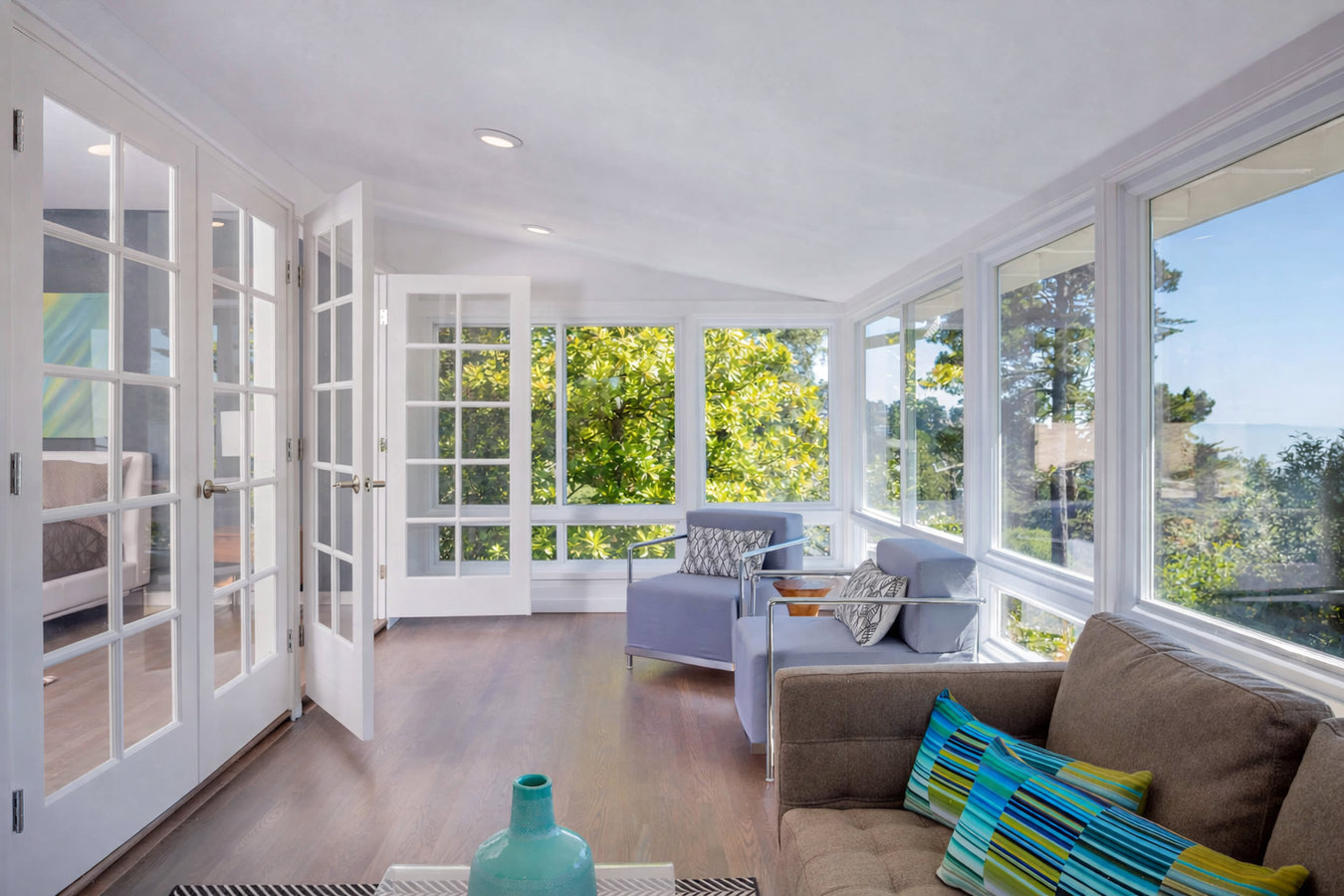
Outdoor Hayward Sunroom Expert serves Pleasanton homeowners with all season rooms, custom sunrooms, and enclosed patio additions suited to the area's hot inland summers and aging housing stock. We handle City of Pleasanton permits, California Title 24 energy compliance, and reply within one business day.
Pleasanton summers regularly push into the 90s and higher, and winters bring consistent rain from November through March. An all season room built with full insulation, low-E glass, and a climate control connection turns a backyard patio into a room your family actually uses year-round - not just on mild spring days.
Pleasanton's inland location means it gets significantly hotter in summer than Bay Area cities near the coast - and a standard three season room becomes unusable in that heat. A four season sunroom with insulated framing and low-E glass handles the temperature swings here without making your air conditioning work overtime on July afternoons.
Most Pleasanton homes built in the 1970s through 1990s have a concrete patio off the back of the house that sits exposed to summer heat and winter rain for months at a time. Enclosing it with glass panels and a proper roof connection is often the most cost-effective way to add usable living space, because the foundation slab is already there.
Pleasanton has a mix of housing eras - from older ranch homes near downtown Main Street to newer two-story subdivisions on the east side of the city. A custom design approach means the new room fits the roofline and exterior finish of your specific home, not a catalog configuration that was designed for a different house style.
Pleasanton's high homeownership rate and median home values above $1.3 million reflect a city where residents invest in their properties. A sunroom addition adds living square footage while connecting the interior of the home to the backyard - a project that makes particular sense on Pleasanton lots that are larger than typical Bay Area properties closer to the coast.
Pleasanton evenings near Shadow Cliffs and the open space corridors on the east side of the city bring insects in summer. An enclosed patio room with screened panels or glass gives you the outdoor connection without that problem, and the enclosure also shields the space from the dry, hot afternoon wind that comes through the Livermore Pass from the Central Valley on hot days.
The bulk of Pleasanton's residential neighborhoods were built between the 1960s and the 1990s. At 30 to 60 years old, a large share of the city's housing stock is now at the age where original roofing, stucco exteriors, and concrete flatwork need real attention. The clay soils that run through the Tri-Valley swell in the wet season and shrink in the dry summer heat - and that annual movement has been working on foundations, driveways, and backyard patios for decades. Before attaching a new room to a house built on this kind of soil, an experienced contractor assesses the existing foundation carefully rather than treating every job as a standard attachment.
Pleasanton's climate also sets the bar for what a sunroom needs to do. Summers are hot - well above 90 degrees regularly - and the city is far enough from the Bay that marine cooling does not soften the afternoon heat the way it does in San Leandro or Castro Valley. A room that functions in this climate needs insulated glass, proper ventilation, and a real climate control plan. The City of Pleasanton enforces California Title 24 energy standards on all new enclosed conditioned spaces, which means the permit package requires energy calculations alongside the structural drawings.
Our crew works throughout Pleasanton regularly, and we understand the local conditions that affect sunroom contractor work here. Pleasanton is a city with distinct housing eras - the older neighborhoods close to the historic downtown along Main Street have homes from the early to mid-1900s with wood-frame construction, while the subdivisions built from the 1970s through the 1990s that make up most of the city are stucco-exterior tract homes on individual lots. What works as a foundation and attachment strategy on a 1975 ranch home near the Alameda County Fairgrounds is different from what works on a 1995 two-story near Bernal Avenue.
Pleasanton sits at the heart of the Tri-Valley. Shadow Cliffs Regional Recreation Area is a landmark most residents know well, and Stoneridge Drive and Bernal Avenue are the main east-west arteries that connect the older western neighborhoods to the newer developments closer to the Dublin city line. The Alameda County Fairgrounds on Valley Avenue host the county fair each summer and are one of the most recognizable landmarks in the region. We know this city neighborhood by neighborhood and approach each job with that familiarity rather than treating Pleasanton as interchangeable with the rest of the East Bay.
We also regularly serve homeowners in neighboring Livermore, which shares Pleasanton's hot inland climate and similarly aged housing stock, and Dublin, just to the north, where newer planned communities have their own permit and HOA considerations.
Reach out by phone or through the contact form and we will respond within one business day. We ask about your home's construction type, the space you want to enclose, and your general timeline so we can arrive at the site visit prepared.
We visit the property to assess the existing foundation, roof line, and attachment points. The estimate we provide in writing breaks out permit fees, materials, and labor separately - so you know what you are paying for and can ask questions about any line item before agreeing.
We prepare and submit the permit package to the City of Pleasanton, including structural drawings and Title 24 energy documentation. Permit review typically takes several weeks - we track the status and keep you updated so construction starts as soon as the permit is in hand.
Most Pleasanton sunroom projects take three to six weeks to build once permits are approved. We schedule the city inspection at the appropriate stage and give you the final inspection paperwork so the addition is properly documented for your home records and future resale.
We serve Pleasanton homeowners throughout the Tri-Valley. Free estimates, permit handling, and no-pressure conversations. Call or submit below and we will be in touch within one business day.
(510) 264-7004Pleasanton is a city of roughly 82,000 residents in the Tri-Valley region of Alameda County, about 25 miles southeast of Oakland. It is one of the more affluent cities in the East Bay, with a homeownership rate around 65 percent and median home values consistently above $1.3 million. The city grew quickly from the 1960s through the 1990s as families relocated from Oakland and San Francisco looking for more space, and that growth wave produced the large share of ranch-style, split-level, and two-story tract homes that define most of the residential neighborhoods today. Closer to the historic core along Main Street, older homes from the early and mid-1900s sit alongside the city's small downtown district, which has been designated a historic area and attracts residents with its walkable block of restaurants and shops. Pleasanton, California on Wikipedia provides a useful overview of the city's history and neighborhoods.
The city is home to major employers including Workday and Oracle, which keep the local economy stable and the homeowner base financially invested in their properties. Shadow Cliffs Regional Recreation Area on Stanley Boulevard is a popular destination for swimming and fishing, and the Alameda County Fairgrounds on Valley Avenue are one of the largest fair venues in California. Pleasanton is closely connected to its Tri-Valley neighbors - homeowners here often have ties to Livermore to the east, which shares the same inland climate and similarly aged housing stock, and to Dublin to the northwest, where newer planned communities have expanded the Tri-Valley's residential footprint over the past two decades.
Convert your existing patio into a comfortable enclosed sunroom.
Learn MorePleasanton homeowners who contact us before the rainy season can schedule their site assessment and get permits moving before winter - so construction starts as soon as spring weather arrives.