Serving Hayward, CA and surrounding areas. (510) 264-7004
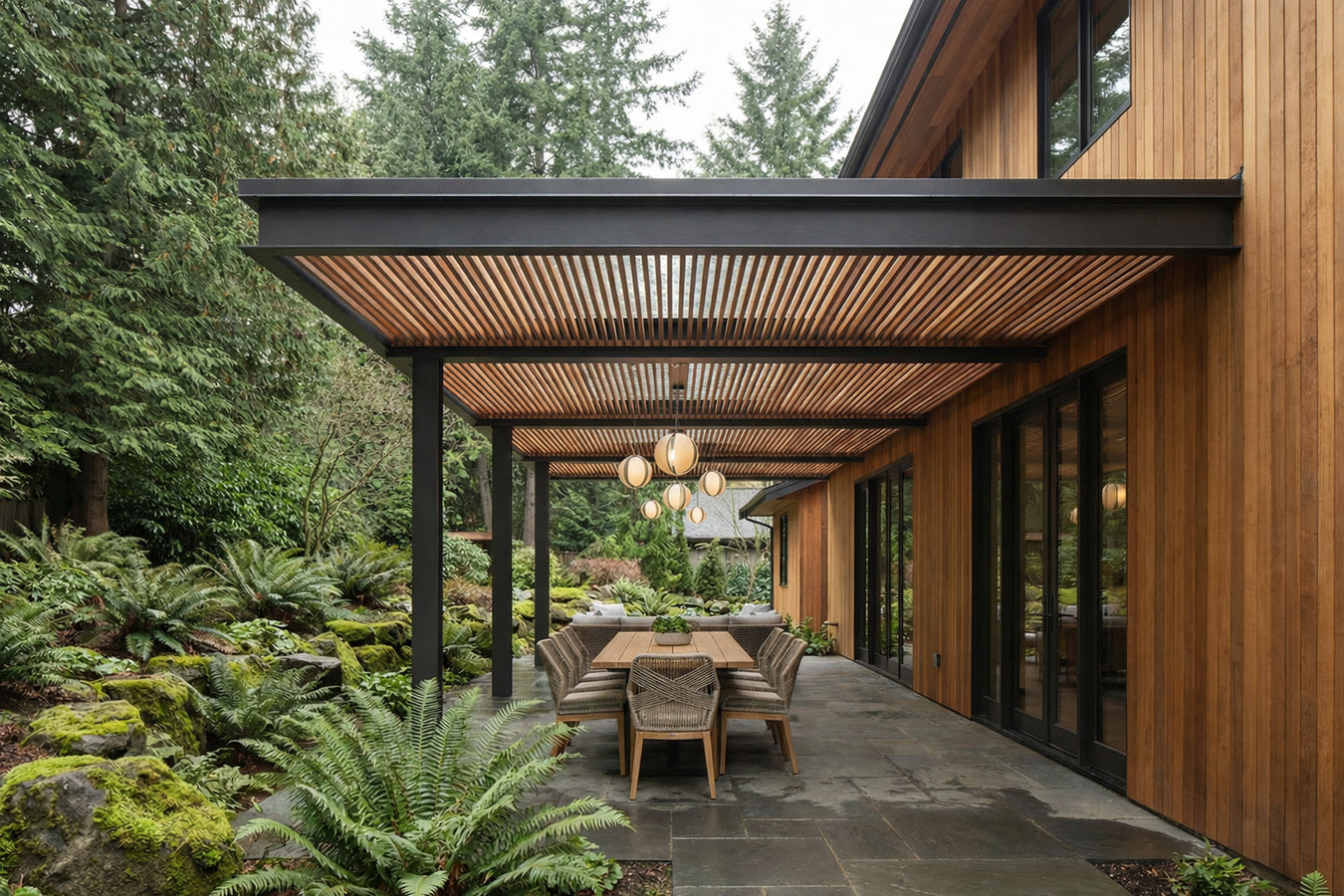
Outdoor Hayward Sunroom Expert serves Livermore homeowners with patio cover installation, four season sunrooms, and enclosed patio additions built to handle the city's intense inland summers and aging ranch-home housing stock. We handle City of Livermore permits and reply within one business day.
Livermore summers regularly push above 100 degrees, and an uncovered patio becomes unusable for months at a time. A properly installed patio cover blocks direct sun and brings afternoon temperatures down enough to make the outdoor space functional again - without the full cost and permit timeline of an enclosed addition.
Livermore sits at the eastern edge of the Tri-Valley with no marine layer to soften summer afternoons - temperatures can reach 105 degrees or higher during heat waves. A four season sunroom with insulated framing and low-E glass gives you a climate-controlled space that works in both summer heat and the cooler, wetter months from November through March.
Many of Livermore's ranch homes from the 1950s and 1960s have a concrete patio slab that was poured when the house was built. That slab is often structurally sound and makes an ideal foundation for an enclosed patio room - eliminating the most time-consuming part of a new addition while giving the homeowner a fully enclosed space without starting from scratch.
Livermore evenings in late summer and early fall bring insects off the surrounding open space and vineyard land east of the city. A screened room lets you use the patio after dark without that problem, and it costs significantly less than a fully enclosed glass addition - making it a good starting point for homeowners who want outdoor living space without a full enclosure budget.
Livermore winters are mild compared to most of the country, but the city does get frost in December and January, and rain from November through March can be heavy. An all season room with full insulation and climate control stays comfortable through both the rainy winters and the extreme summer heat - giving you a year-round room rather than one that is only pleasant in April and May.
Livermore has a high rate of long-term homeownership - roughly 60 to 65 percent of homes are owner-occupied - and many residents have lived in their homes for a decade or more. A sunroom addition is the kind of project that makes sense when you plan to stay, adding living square footage and connecting the interior to the backyard in a way that works for how the home is actually used.
Livermore's housing stock is older than most Tri-Valley cities. The majority of homes were built between the 1950s and 1990s - single-story ranch-style construction on individual lots, with stucco or wood siding, low-pitched roofs, and attached garages. At 40 to 70 years old, a large share of these homes have original roofing and minimal insulation by current standards. The oldest homes, concentrated in the neighborhoods closest to historic downtown Livermore, predate modern building codes entirely and may have wood-frame construction on foundations that were poured before current seismic requirements existed. Working on these homes requires a different level of care and assessment than working on a 1990s tract home in a newer subdivision.
The climate here creates clear demand for enclosed and covered outdoor spaces. Livermore is one of the hottest cities in the Bay Area region - temperatures regularly exceed 95 degrees from June through September, and triple-digit heat waves happen most summers. That heat, combined with the Diablo winds that roll through the valley in fall, makes an open patio uncomfortable for much of the year. The clay soils found throughout the Livermore Valley also expand and contract with every wet-dry seasonal cycle, which means any concrete slab, foundation, or attachment point needs to be assessed before a new room is attached to the structure. Contractors who work here regularly know to check the existing conditions first rather than assuming the home is ready for a standard attachment.
Our crew works throughout Livermore regularly, and we understand the local conditions that affect sunroom contractor work here. Livermore is a city where the housing stock tells a clear story of different eras. The older neighborhoods west of downtown - including streets close to the historic core near First Street - have ranch homes and bungalows built in the 1950s and 1960s on smaller in-town lots. The newer subdivisions in north and east Livermore, particularly near Portola Avenue and the Springtown district, are two-story homes from the late 1990s and 2000s with tile roofs and HOA-managed common areas. These two parts of the city need different approaches, and we have worked in both.
Livermore is easy to navigate once you know it. Interstate 580 runs along the northern edge of the city, and Vasco Road connects the residential areas to the south toward the wine country vineyards that are one of the city's best-known features. The Lawrence Livermore National Laboratory sits on the southeast edge of the city and is the landmark most residents reference when describing where they live. The lab brings long-term residents who invest in their homes, which is consistent with what we see when we work here - owners who plan to stay and care how the finished project looks and performs.
We regularly serve homeowners in neighboring Pleasanton, which sits just to the west and shares Livermore's hot inland climate and Tri-Valley geography, and Union City, further west toward the Bay, where older housing stock from the same postwar building era creates similar project considerations.
Reach us by phone or through the estimate form on this site. We reply within one business day. We will ask a few questions about your property, the type of addition you have in mind, and the age of your home so we can give you an honest picture of what the project involves before we visit.
We come to your property and assess the existing structure, foundation, and site conditions. For older Livermore ranch homes, this includes checking the foundation and existing slab for signs of movement from clay soil. The visit is free and results in a written, itemized estimate covering materials, labor, and permit fees so there are no surprises later.
We prepare and submit the full permit package to the City of Livermore, including structural drawings and any required energy calculations. Permit review typically takes four to eight weeks. We track the application and handle plan check comments so you do not have to manage the process with the building department yourself.
Once the permit is in hand, construction runs three to six weeks depending on room size and finish. We schedule city inspections at each required stage and walk you through the finished room before the final inspection so you know exactly what was built and how it was done.
We serve Livermore homeowners across the Tri-Valley. No commitment required - just a straight answer about what your project involves and what it will cost.
(510) 264-7004Livermore is a city of roughly 92,000 residents at the eastern end of the Tri-Valley, in Alameda County. It sits at the edge of where the Bay Area meets the Central Valley, which is why summers here are hotter than most of the region - the marine cooling that softens temperatures in cities closer to the Bay does not reach Livermore. The city grew in phases: the oldest homes are concentrated near the historic downtown core and in the neighborhoods along First Street, where some houses date back to the early 1900s. The postwar ranch-home expansion filled in most of the residential areas from the 1950s through the 1970s. Newer subdivisions off Portola Avenue and in the Springtown district were added from the 1990s through the 2010s. The result is a city with several distinct housing eras, each with different structural conditions and maintenance needs.
Livermore is best known regionally for two things: the Livermore Valley wine country, which surrounds the city with vineyards and draws visitors from across Northern California, and the Lawrence Livermore National Laboratory, which has shaped the city's resident profile for decades. Long-term homeownership is the norm here, and residents tend to invest in their properties. Neighboring Pleasanton to the west has a similar Tri-Valley climate and homeownership profile, and Union City further west offers a comparison point for how housing and permit conditions differ as you move from the inland valley toward the Bay.
Convert your existing patio into a comfortable enclosed sunroom.
Learn MoreWe serve homeowners throughout Livermore and the Tri-Valley. Call us or submit an estimate request and we will get back to you within one business day.