Serving Hayward, CA and surrounding areas. (510) 264-7004
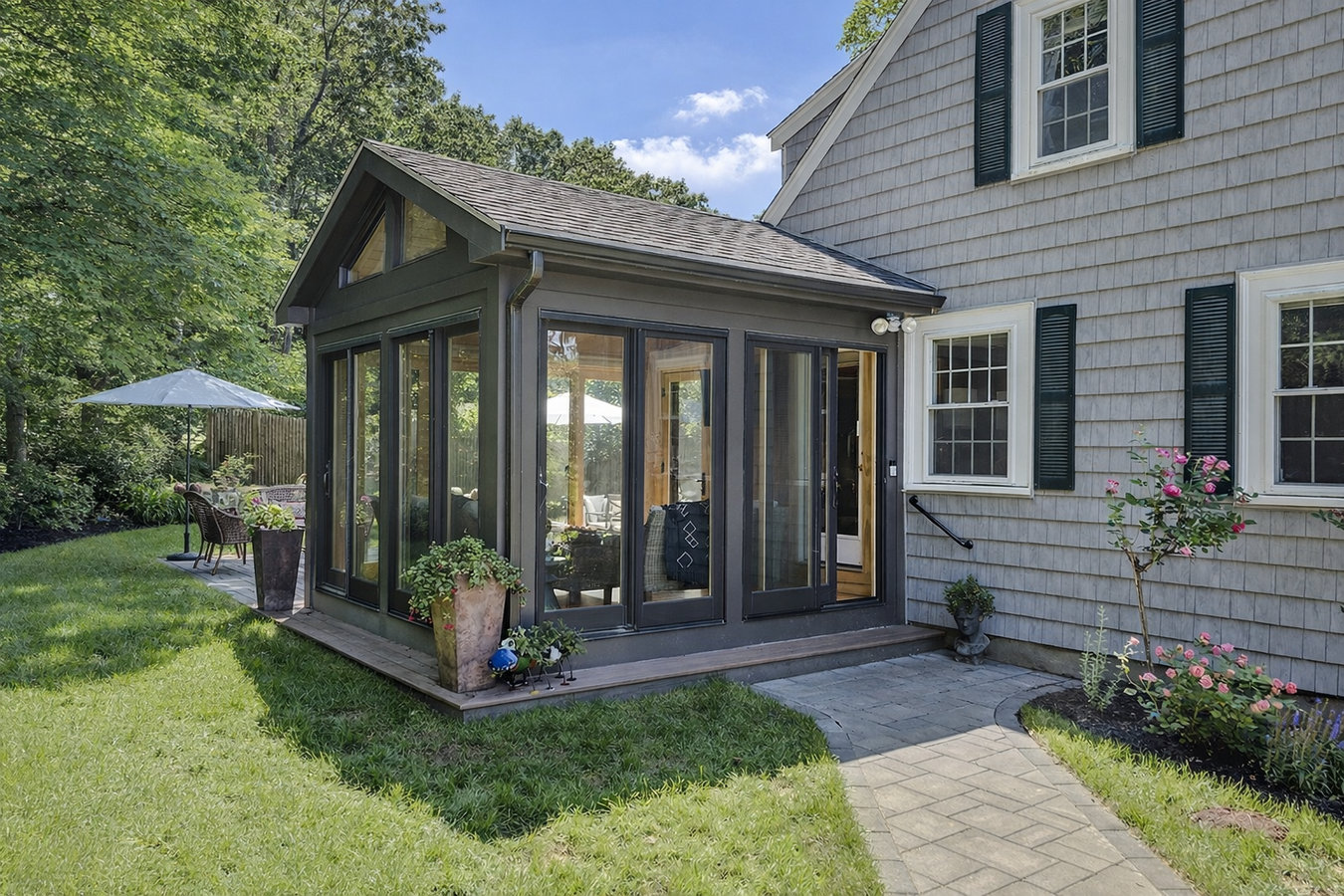
Outdoor Hayward Sunroom Expert serves Dublin homeowners with four season sunrooms, custom room additions, and patio enclosures sized for the two-story homes throughout Schaefer Ranch, Positano, and Fallon Village. We handle City of Dublin permits, work with HOA architectural review processes, and reply within one business day.
Dublin summers regularly push into the 90s, and the Tri-Valley gets no significant coastal cooling from June through September. A four season sunroom built with insulated low-E glass and a dedicated HVAC connection stays comfortable through both the heat of late summer and the wet cold of January - something an uninsulated three season room simply cannot do.
Dublin planned communities were built to consistent architectural standards, and HOA design guidelines often specify materials, colors, and roof pitch requirements for any addition. A custom design approach means the new room matches the existing roofline and exterior finish of your specific home rather than looking like an add-on kit that does not belong there.
Most Dublin homes built in the 1990s and 2000s have a concrete patio in the backyard that is fine on mild days but exposed during summer heat and winter rain. Enclosing that patio with glass panels and a proper roof connection gives you weather-protected space that is usable far more of the year, at a cost that is typically lower than a ground-up addition.
Dublin homeowners who want the addition to function as genuine living space - not a seasonal porch - need a fully insulated and heated all season room. These are built and insulated to the same standards as interior rooms, which matters in a climate where summer temperatures can top 100 degrees and winter nights drop below 40.
Dublin homes are generally larger than older East Bay properties, and many homeowners want a sunroom addition that is proportional to the house - not a cramped box bolted to the back wall. We size sunroom additions to the scale of the home and the backyard lot, which in Dublin's newer subdivisions often means more room to work with than in older, denser communities.
Dublin's warm, dry summers are pleasant - except for the insects that arrive in backyard areas near the city's open space preserves and creek corridors in the evenings. A screen room is the most straightforward solution, and at a lower price point than a glazed enclosure it is a popular first step for homeowners who want to test how they use the outdoor space before committing to a full enclosure.
Dublin grew fast, and most of that growth happened through large planned developments built by major homebuilders in the 1990s and 2000s. The result is a city where most homes are relatively new - 15 to 30 years old - but where those homes are now hitting the age where roofing, exterior stucco, and backyard hardscape need their first serious attention. The stucco exteriors that dominate Dublin's subdivisions can develop hairline cracks as homes settle, and the concrete driveways and patios from the early 2000s build wave are now old enough to show the effects of the Tri-Valley's expansive clay soils. None of these are crises on their own, but they affect how a contractor approaches attaching a new room to the back of the house.
Dublin also has a meaningful HOA layer on top of standard city permitting. Many of the planned communities require architectural review before any exterior addition is approved, and the city's building department reviews plans separately. A contractor who only knows the permit side of this process can create delays for homeowners in HOA communities. The City of Dublin Building and Safety Division handles structural permit review, and their requirements include current California energy code compliance for any conditioned enclosed space.
Our crew works throughout Dublin regularly, and we pull permits from the City of Dublin Building and Safety Division for room addition and enclosure projects. Dublin is a newer city than most of our service area, and working here means understanding how the planned community structure shapes the project process - from HOA architectural submittals through city permit and inspection.
Dublin is a recognizable city to anyone who commutes through the East Bay. The Dublin/Pleasanton BART station on Dublin Boulevard is one of the busiest in the region, and Camp Parks along Dougherty Road has been part of the city's landscape since World War II. The newer streets east of Fallon Road, where the most recent subdivisions are still being completed, back up against the rolling hills that define the Tri-Valley's eastern edge. Whether a homeowner is near The Wave water park on the west side or out in the Fallon Village neighborhood on the east, we know the city well enough to show up prepared for what we will find.
We also regularly serve homeowners in neighboring San Ramon and Pleasanton, both of which are just across the city line from Dublin and share the same Tri-Valley climate, newer housing stock, and HOA-driven community structure.
Call or use the contact form to tell us what you have in mind. We reply within one business day and schedule a visit to your Dublin property at a time that is convenient for you.
We visit your property to assess the backyard, patio area, existing slab condition, and the rear wall of the house. The estimate is written and itemized - materials, labor, permit fees, and any HOA filing costs are listed separately. This is also when we talk through design options and whether your HOA has specific requirements that shape the approach.
We submit the City of Dublin building permit application and assist you with the HOA architectural review documentation. These two processes run in parallel when possible. Construction begins once both approvals are in hand - we let you know when we are ready to schedule the start date.
Construction typically runs three to six weeks depending on the size of the project. We coordinate the city final inspection and walk through the finished room with you before closing out the job. Any punch list items from that walkthrough are resolved before we are done.
We serve homeowners throughout Dublin, CA, including Schaefer Ranch, Positano, and Fallon Village. Get a free, honest estimate with no obligation.
(510) 264-7004Dublin is one of the fastest-growing cities in California, expanding from around 30,000 residents in 2010 to over 70,000 by the early 2020s. Most of that growth came through large master-planned developments like Schaefer Ranch on the western hills, Positano in the central residential core, and Fallon Village on the eastern edge near the open space preserves. The city sits in the heart of the Tri-Valley alongside Pleasanton, San Ramon, and Livermore, with BART service connecting Dublin commuters to Oakland and San Francisco. The typical Dublin home is a two-story single-family house with a tile roof, attached two-car garage, and a concrete patio in the back - built by one of the major California homebuilders in the 1990s or 2000s. For more background on the city, see the Dublin, California Wikipedia article.
The residential neighborhoods in Dublin are predominantly owner-occupied, and homeowners here tend to be long-term residents who have invested heavily in their properties. Homes that were new in 2002 or 2005 are now 20-plus years old, and many are seeing their first round of significant exterior maintenance and addition projects. Homeowners considering sunroom work in neighboring San Ramon will find a city with a nearly identical housing profile - newer planned communities, similar HOA structures, and the same Tri-Valley climate - making it a natural extension of the work we do in Dublin.
Convert your existing patio into a comfortable enclosed sunroom.
Learn MoreWe are actively working throughout Dublin and the Tri-Valley - call us today and we will schedule a site visit within the week.